What are Reciprocal Tariffs
Reciprocal tariffs are trade measures implemented by a country to counterbalance tariffs imposed by another nation. These tariffs aim to ensure fair and equitable trade terms by leveling the playing field. The U.S. government has adopted such measures to address trade imbalances and protect domestic industries from unfair competition. By implementing reciprocal tariffs, the U.S. encourages other countries to lower their tariffs and engage in fair trade practices.
With a 46% reciprocal tariff on Vietnamese products and a 49% reciprocal tariff on Cambodian products, effective from April 9, the U.S. has introduced some of the highest tariffs under its new trade policy.
Navigating the New Reciprocal Tariffs
Developing the right tariff mitigation strategy is crucial to minimize costs, ensure compliance, & maintain supply chain resilience. Companies should review their supply chains, explore the available immediate, mid-term and long-term strategies to mitigate tariff impacts. Additionally, investing in technology and innovation can improve efficiency and boost competitiveness.
How KPMG can help
KPMG in Vietnam has a dedicated and specialised Trade & Customs team of professionals with local and international experience and well-established credentials. We are a part of and work closely with the KPMG regional and global Trade & Customs network, especially our US Trade & Customs colleagues to help you stay abreast of the potential disruptions and manage the potential tariff impacts effectively. We can do that by:
- Monitoring and providing you with essential insights to navigate the evolving trade and tariff landscape and proactively deal with the AD/CVD threats.
- Country of origin and impact analysis – Vietnam and the US have different rules of origin. We will review your supply chain (material traceability), analysing you production processes (substantial transformation analysis) to determine whether your products meet the rules of origin. We can advise you of the potential impacts and how to mitigate risks associated with country of origin of your products.
KPMG's House View
Tariff Insight Series
As global trade dynamics continue to shift, tariffs are playing a more prominent role in shaping cross-border strategies. KPMG in Vietnam’s Tariff Insight Series offers timely perspectives and practical analysis on key developments and their potential impact on export manufacturing, supply chains and strategic resilience.
This is an ongoing series. Future articles will explore policy changes, risk mitigation approaches and steps businesses can consider to adapt with confidence. Stay tuned for regular updates and insights from our trade and tax professionals.

Trump’s Reciprocal Tariffs
Implications for Vietnam’s Export Manufacturing and Strategic Resilience
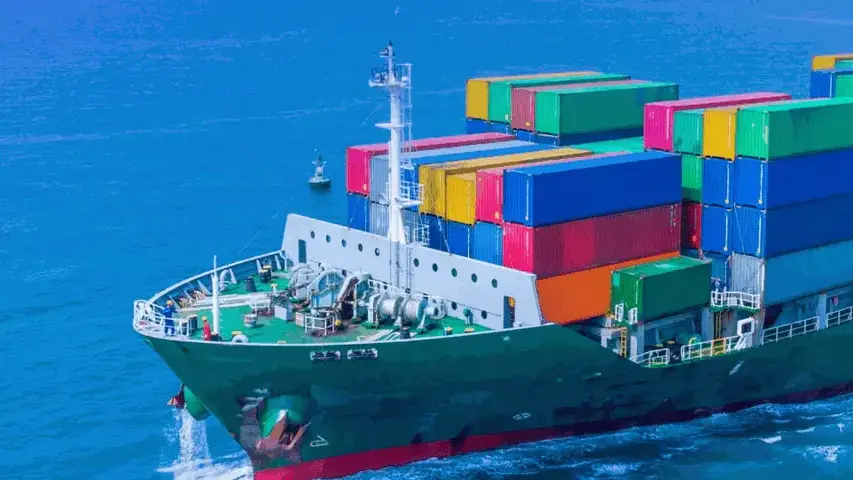
The Trump Tariff Shock: Navigating New Economic Waters for Vietnamese Exporters
Understanding reciprocal tariffs and mitigate impacts with confidence
Request a demo of the KPMG Tariff Modeler
The KPMG approach to tariff modeling leverages the latest technologies while considering the data needed to navigate today’s global trade disruption.
Access our latest publications
Navigating the New Reciprocal Tariffs
Customs Alert - The tariff landscape under the new Trump administration (English) Customs Alert - The tariff landscape under the new Trump administration (Vietnamese)

Hoang Thuy Duong
Partner
Head of Tax
KPMG in Vietnam

Nhan Huynh
Partner
Head of Trade & Customs and Value Chain Management
KPMG in Vietnam