Corporate Income Tax Seminar
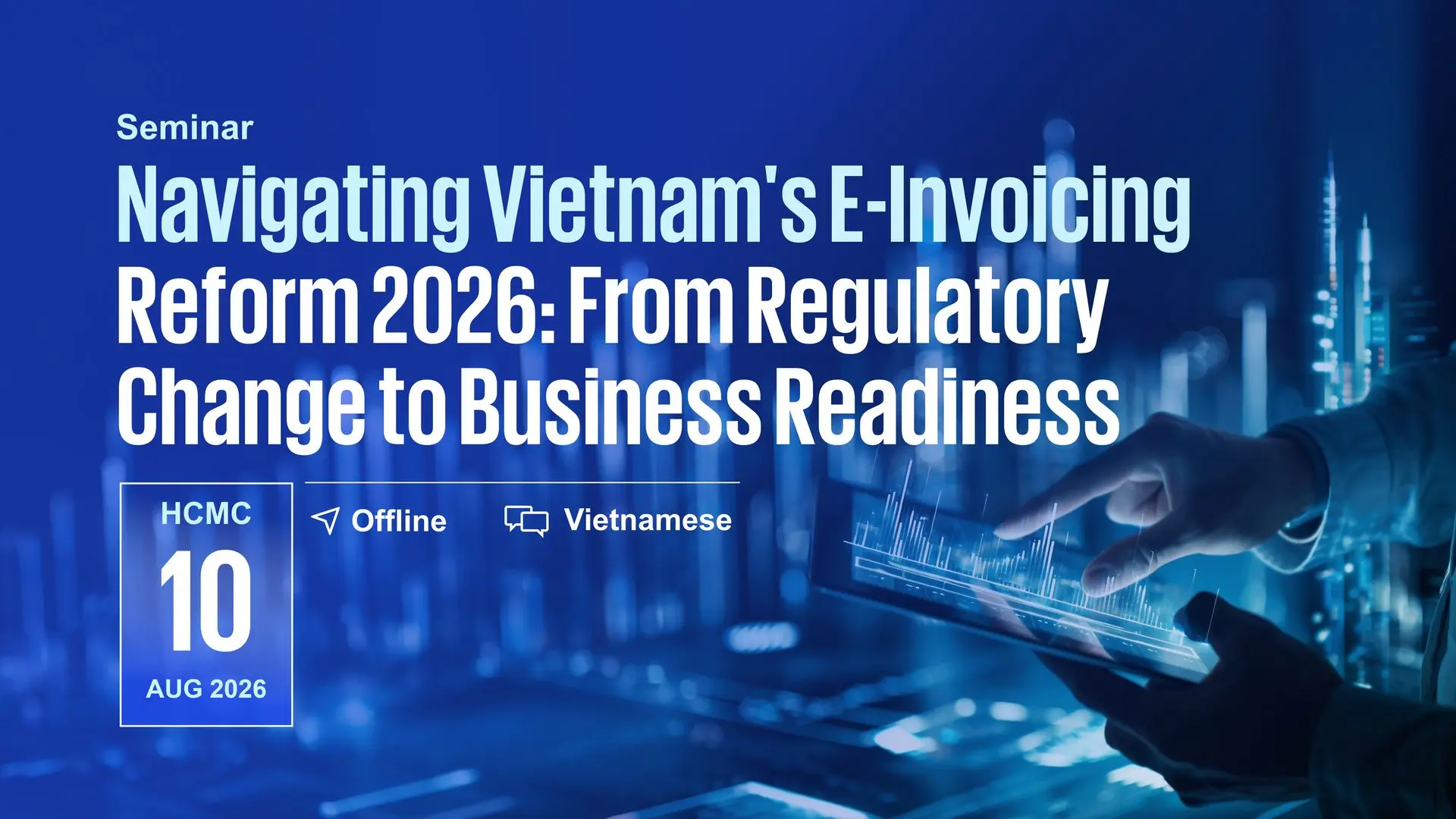
Navigating Vietnam's E-Invoicing Reform 2026: From Regulatory Change to Business Readiness
Key changes to the administration and use of electronic invoices and electronic documents, effective 1 July 2026
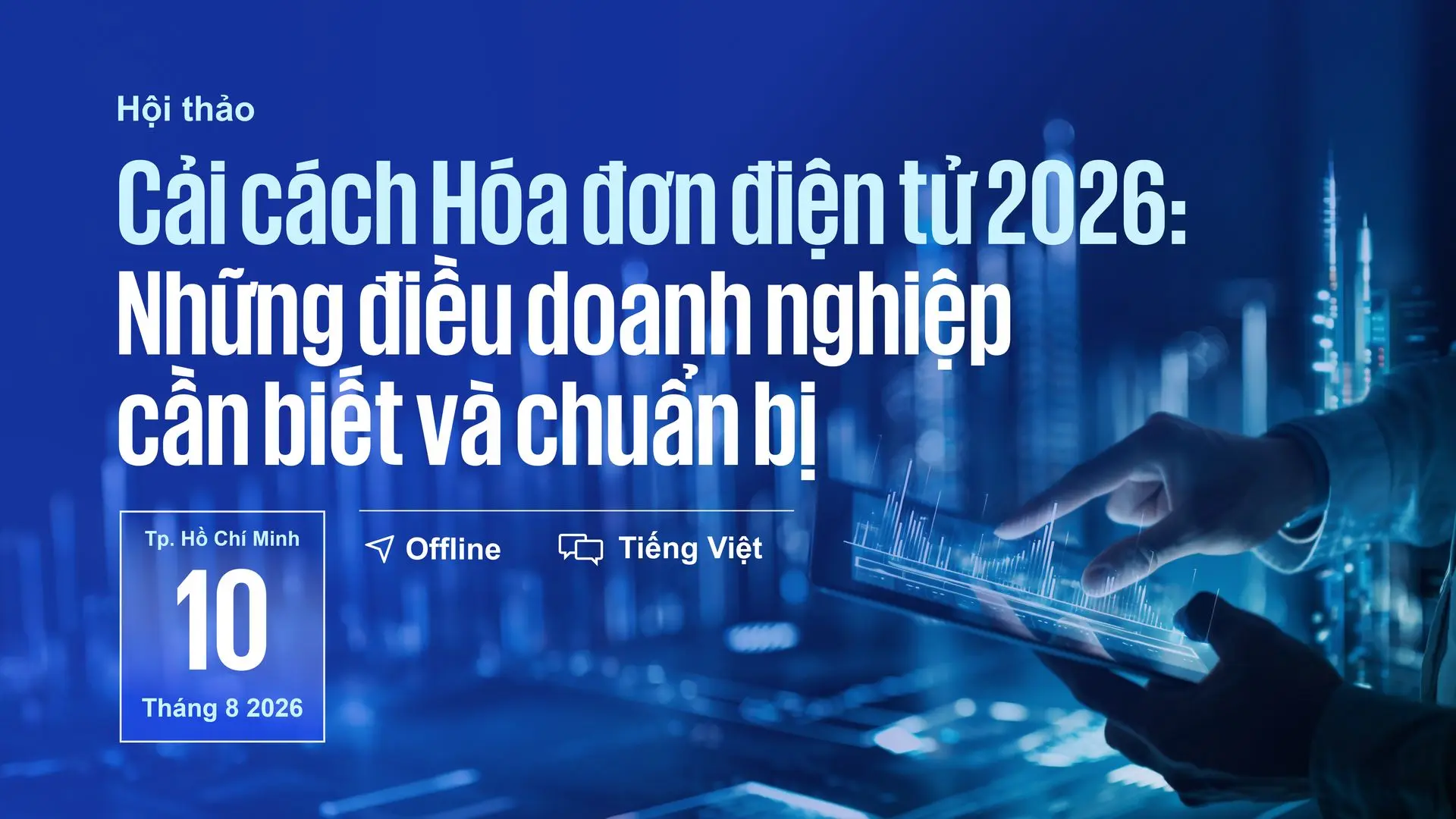
Hội thảo Thuế Doanh nghiệp
Cải cách Hóa đơn điện tử 2026: Những điều doanh nghiệp cần biết và chuẩn bị
Những thay đổi quan trọng về quản lý và sử dụng hóa đơn điện tử, chứng từ điện tử, có hiệu lực từ ngày 1 tháng 7 năm 2026.
OVERVIEW
Two instruments, one framework
On 30 June 2026, the Government issued Decree No. 254/2026/ND-CP detailing certain articles and implementation measures of the Law on Tax Administration No. 108/2025/QH15 on electronic invoices and electronic documents. On the same date, the Ministry of Finance issued Circular No. 91/2026/TT-BTC guiding several provisions of the Law on Tax Administration and Decree 254.
Decree 254 and Circular 91 introduce a range of notable changes to the administration and use of e-invoices and e-documents, and strengthen taxpayer risk management in this area.
TỔNG QUAN
Quy định mới, hai văn bản
Ngày 30 tháng 6 năm 2026, Chính phủ ban hành Nghị định 254/2026/NĐ-CP quy định chi tiết một số điều và biện pháp thi hành Luật Quản lý thuế số 108/2025/QH15 về hóa đơn điện tử và chứng từ điện tử. Cùng ngày, Bộ Tài chính ban hành Thông tư 91/2026/TT-BTC hướng dẫn một số nội dung của Luật Quản lý thuế và Nghị định 254.
Nghị định 254 và Thông tư 91 đưa ra nhiều thay đổi đáng chú ý về quản lý, sử dụng hóa đơn điện tử, chứng từ điện tử và tăng cường quản lý rủi ro người nộp thuế trong lĩnh vực này.
WHAT CHANGED
Six key changes
A summary of the notable points introduced by Decree 254 and Circular 91.
The definition of "illegal use of invoices and documents" is amended so that it no longer covers cases where invoices and documents do not contain all mandatory contents as prescribed.
Additional subjects may voluntarily register to use e-invoices, including operators of e-commerce platforms, foreign digital platform operators conducting business on e-commerce platforms, and providers of other services generating taxable revenue in Vietnam.
- Clarifies which entities must use e-invoices generated from cash registers in prescribed sectors. Household and individual businesses with annual revenue over VND1 billion, or selling assets subject to registration of ownership or use rights, must use e-invoices.
- Provides guidance on invoice issuance when allocating revenue and expenses among parties to a business cooperation contract.
- Clarifies cases where e-invoices are not required, including certain household and individual business transactions, financial and insurance transactions, capital contributions or asset transfers, lending of machinery and equipment that are fixed assets, tools or instruments for processing goods without charge and without transfer of ownership, and certain cases exempt under VAT regulations.
- For services paid before they are provided, the provider need not issue an invoice on receipt of a deposit if the deposit is made under the Civil Code to secure performance of the service contract.
- Adds services that may be invoiced periodically after reconciliation or data completion, including online newspaper advertising, digital technology services, digital platform services, IT services, insurance services, security services, and passenger transport services using transport-connection support software, when provided to corporate and organisational customers.
- Sellers without automatic e-invoice software that make sales during night working hours may issue e-invoices no later than the next working day.
- Adds a requirement to prepare and submit a Detailed Transaction Information Statement to the tax authority for certain services provided to individual consumers.
- Clarifies when personal income tax (PIT) withholding certificates are not required for certain income already withheld and paid at source, such as securities transfers, capital investment, crypto-asset transfers, gold bar transfers, royalties and franchising.
- Adds a mandatory field for the code and address of the business location for household and individual businesses operating multiple stores and entities engaged in petroleum trading.
- Where a consumer does not provide a name, address or personal identification number, the invoice must clearly state "Sold to consumer".
- Adds provisions on invoice contents for goods and service descriptions, the sale of automobiles and motorcycles, and domestic road transport services.
- Foreign suppliers' electronic signatures must comply with regulations on electronic transactions.
Sets out how to handle issued e-invoices and e-documents that contain mistakes or incorrect information, transitional provisions, and cases of suspension or temporary suspension of e-invoice use.
NHỮNG ĐIỂM CHÍNH
Sáu nhóm thay đổi chính
Tóm tắt các nội dung đáng chú ý của Nghị định 254 và Thông tư 91.
Định nghĩa "sử dụng không hợp pháp hóa đơn, chứng từ" được sửa đổi, không còn bao gồm trường hợp hóa đơn, chứng từ không ghi đầy đủ các nội dung bắt buộc theo quy định.
Bổ sung đối tượng được đăng ký tự nguyện sử dụng hóa đơn điện tử, gồm chủ quản nền tảng thương mại điện tử, nền tảng số ở nước ngoài có hoạt động kinh doanh trên nền tảng thương mại điện tử, và các dịch vụ khác phát sinh doanh thu tính thuế tại Việt Nam.
- Làm rõ đối tượng sử dụng hóa đơn điện tử khởi tạo từ máy tính tiền trong các lĩnh vực theo quy định. Hộ kinh doanh, cá nhân kinh doanh có doanh thu hằng năm trên 1 tỷ đồng, hoặc bán tài sản phải đăng ký quyền sở hữu, quyền sử dụng, bắt buộc sử dụng hóa đơn điện tử.
- Hướng dẫn cơ chế lập hóa đơn khi phân chia doanh thu, chi phí giữa các bên tham gia hợp đồng hợp tác kinh doanh.
- Làm rõ các trường hợp không phải sử dụng hóa đơn điện tử, gồm một số giao dịch của hộ kinh doanh, cá nhân kinh doanh, giao dịch tài chính, bảo hiểm, góp vốn hoặc điều chuyển tài sản, cho mượn máy móc thiết bị là tài sản cố định, công cụ, dụng cụ để gia công hàng hóa mà không thu tiền và không chuyển quyền sở hữu, cùng một số trường hợp không phải lập hóa đơn theo quy định về thuế giá trị gia tăng.
- Với dịch vụ thu tiền trước khi cung ứng, bên cung cấp chưa phải lập hóa đơn khi nhận tiền đặt cọc nếu khoản đặt cọc được thực hiện theo Bộ luật Dân sự nhằm bảo đảm thực hiện hợp đồng.
- Bổ sung các dịch vụ được xuất hóa đơn theo kỳ sau khi đối soát hoặc hoàn tất dữ liệu, gồm quảng cáo trên báo điện tử, dịch vụ công nghệ số, nền tảng số, công nghệ thông tin, bảo hiểm, bảo vệ, và vận tải hành khách có sử dụng phần mềm hỗ trợ kết nối vận tải, khi cung cấp cho khách hàng là doanh nghiệp, tổ chức.
- Người bán không có phần mềm lập hóa đơn tự động phát sinh giao dịch trong giờ làm việc ban đêm được lập hóa đơn chậm nhất là ngày làm việc tiếp theo.
- Bổ sung yêu cầu lập và gửi cơ quan thuế Bảng thông tin chi tiết giao dịch đối với một số dịch vụ cung cấp cho cá nhân là người tiêu dùng.
- Làm rõ trường hợp không phải lập chứng từ khấu trừ thuế thu nhập cá nhân với một số khoản thu nhập đã khấu trừ, nộp thuế tại nguồn, như chuyển nhượng chứng khoán, đầu tư vốn, chuyển nhượng tài sản mã hóa, chuyển nhượng vàng miếng, bản quyền và nhượng quyền thương mại.
- Bổ sung chỉ tiêu bắt buộc về mã, địa chỉ địa điểm kinh doanh với hộ kinh doanh, cá nhân kinh doanh có nhiều cửa hàng và đơn vị hoạt động kinh doanh xăng dầu.
- Trường hợp người mua không cung cấp tên, địa chỉ, số định danh cá nhân, hóa đơn thể hiện rõ "Bán cho người tiêu dùng".
- Bổ sung quy định về nội dung hóa đơn với tên hàng hóa, dịch vụ, và nội dung đối với ô tô, xe máy và dịch vụ vận tải trong nước.
- Chữ ký điện tử của nhà cung cấp ở nước ngoài phải tuân theo quy định pháp luật về giao dịch điện tử.
Quy định cách xử lý hóa đơn điện tử, chứng từ điện tử đã lập bị sai hoặc sai thông tin, các quy định chuyển tiếp, và trường hợp ngừng, tạm ngừng sử dụng hóa đơn điện tử.
OUR AUDIENCE
Who should attend
Finance, accounting, and tax leaders responsible for e-invoice compliance and regulatory implementation.
General Director Chief Financial Officer Chief Accountant Tax Manager Accountant Finance Analyst
ĐỐI TƯỢNG
Ai nên tham gia?
Lãnh đạo và chuyên gia tài chính, kế toán, thuế phụ trách tuân thủ hóa đơn điện tử và triển khai quy định mới.
Tổng Giám đốc Giám đốc Tài chính Trưởng phòng tài chính Kế toán trưởng Trưởng phòng Thuế Kế toán viên Chuyên viên phân tích tài chính
WHO IS AFFECTED
Who should take a closer look
Digital and e-commerce platforms
Operators of e-commerce and foreign digital platforms generating taxable revenue in Vietnam.
Household and individual businesses
Learn where sharing and transfer arrangements are most likely to fall short, so you can spot exposure in your own organization.
Periodically invoiced services
Online advertising, digital and IT services, insurance, security, and app-based passenger transport.
Foreign suppliers
Those using electronic signatures must comply with electronic transaction rules.
Multi-store retail and petroleum
Multi-store operators and petroleum traders must add the business-location code and address.
Businesses with income taxed at source
Income such as securities, capital investment, crypto-assets, gold bars, royalties and franchising.
AI NÊN QUAN TÂM
Những đối tượng cần rà soát
Nền tảng số và thương mại điện tử
Chủ quản nền tảng thương mại điện tử và nền tảng số ở nước ngoài có doanh thu tính thuế tại Việt Nam..
Hộ và cá nhân kinh doanh
Đơn vị có doanh thu hằng năm trên 1 tỷ đồng hoặc bán tài sản phải đăng ký quyền sở hữu, quyền sử dụng.
Dịch vụ xuất hóa đơn theo kỳ
Quảng cáo báo điện tử, công nghệ số, công nghệ thông tin, bảo hiểm, bảo vệ và vận tải hành khách theo phần mềm kết nối.
Nhà cung cấp nước ngoài
Đơn vị sử dụng chữ ký điện tử phải tuân thủ quy định pháp luật về giao dịch điện tử.
Bán lẻ đa cửa hàng và xăng dầu
Hộ, cá nhân kinh doanh nhiều cửa hàng và đơn vị kinh doanh xăng dầu phải bổ sung mã, địa chỉ địa điểm kinh doanh.
Doanh nghiệp có thu nhập khấu trừ tại nguồn
Các khoản như chuyển nhượng chứng khoán, đầu tư vốn, tài sản mã hóa, vàng miếng, bản quyền và nhượng quyền.
FEATURED EXPERTS
Speaker
LẮNG NGHE CHUYÊN GIA
Diễn giả

Nguyen Quoc Huy
Giám đốc
Tax Advisory
KPMG Việt Nam

Lam Thi Ngoc Thuy
Associate Director
Tax Advisory
KPMG Việt Nam
Nguyễn Quốc Huy
Giám đốc
Dịch vụ Tư vấn Chiến lược Thuế
KPMG Việt Nam

Lâm Thị Ngọc Thủy
Phó Giám đốc
Dịch vụ Tư vấn Chiến lược Thuế
KPMG Việt Nam
SEMINAR
Date: 10 Aug 2026
Time: 14:00 - 16:00
KPMG Office
115 Nguyen Hue St, Saigon Ward, HCMC
Event's Information
Seminar
Navigating Vietnam's E-Invoicing Reform 2026:
From Regulatory Change to Business Readiness
Format: Offline
Date: 10 Aug 2026
Fee: Free
Duration: 3 hours
Language: Vietnamese
Location: HCMC KPMG Office